Emergency Water Extraction
Tell us where the water came from and which rooms are affected.
Standing water needs a clear response plan
Water extraction is often the first major step after a pipe break, appliance overflow, roof leak, or indoor flood. Removing visible water quickly helps limit how far it can travel into flooring, baseboards, drywall, insulation, cabinets, and nearby rooms. Our team assesses the source, checks for safety concerns, and selects extraction equipment based on the depth and location of the water.
Extraction is only the beginning. Materials can remain wet even after the floor looks dry, so we check surrounding surfaces and prepare the affected area for structural drying. When needed, we move furniture, lift damaged flooring, remove water from carpet and pad, or create access to trapped moisture. [CTA:estimate]
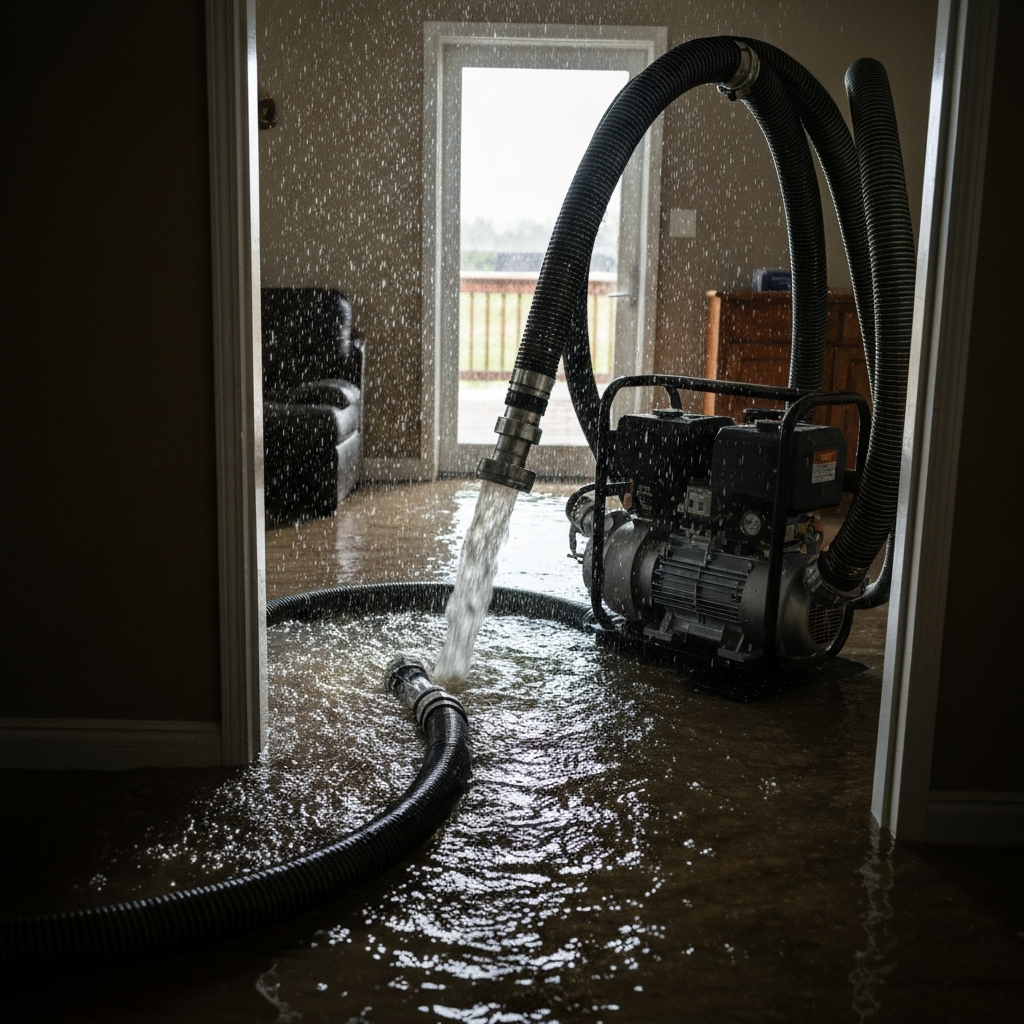
What our water extraction service includes
We tailor the extraction process to the building, water source, affected materials, and amount of water present. Our goal is to remove bulk water efficiently while protecting areas that were not damaged.
Source and safety assessment
We identify the likely source of the water, confirm whether it has stopped, and look for electrical hazards, weakened materials, ceiling damage, or contamination concerns.
Standing water removal
We use professional extraction equipment to remove water from hard surfaces, carpet, low areas, and other accessible locations.
Carpet and pad evaluation
We determine whether carpet and padding can be extracted and dried or whether the material is too damaged or contaminated to remain.
Furniture and contents protection
When practical, we move or block furniture, protect nearby belongings, and create a safer work area for extraction and drying.
Hidden moisture checks
We check adjoining floors, walls, baseboards, cabinets, and other materials that may have absorbed water beyond the visible wet area.
Drying preparation
After bulk water removal, we prepare the space for air movers, dehumidifiers, and follow-up moisture monitoring.
Our water extraction process
Discuss the water loss
We ask what happened, when it started, whether the source has stopped, and which areas are affected.
Inspect the property
We evaluate visible water, surrounding materials, safety concerns, and possible moisture migration.
Remove bulk water
We extract standing water from accessible surfaces and materials using equipment suited to the loss.
Check hidden areas
We take moisture readings and inspect adjoining surfaces that may still be wet.
Begin drying
We place drying equipment where needed and explain the expected monitoring schedule.
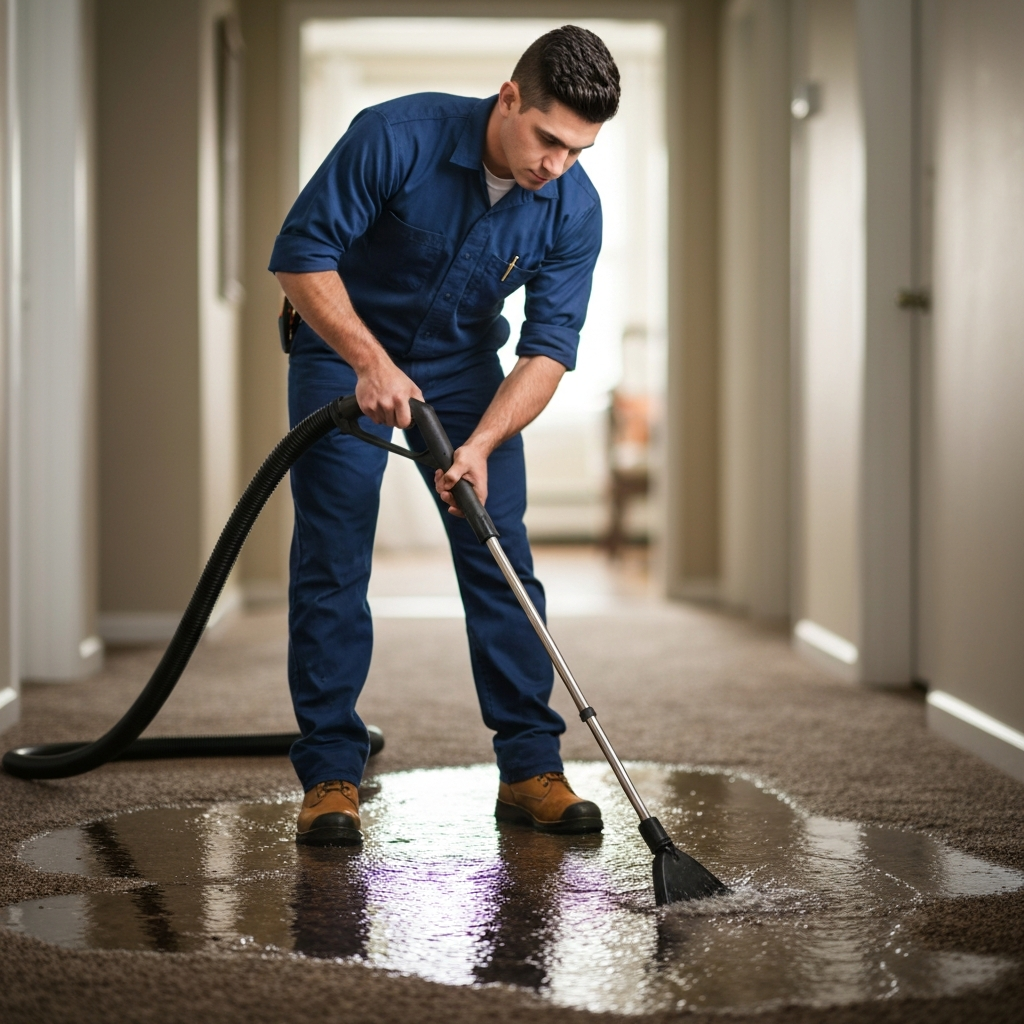
Why Choose Us for Emergency Water Extraction
Extraction matched to the loss
We choose equipment and methods based on the property rather than treating every water loss the same way.
Attention beyond visible water
We look for moisture that may have spread under flooring, into wall cavities, or beneath cabinets.
Clear next steps
After extraction, we explain the drying plan, materials at risk, and any removal that may be needed.
Organized work areas
We protect unaffected spaces and keep hoses, cords, and equipment arranged as safely as the site allows.
Estimated water extraction costs
These planning ranges are not quotes. Final cost depends on water depth, affected materials, contamination, access, labor, equipment, and required drying.
| Service | Estimated Cost | Average |
|---|---|---|
| Small-room extraction | $500–$1,500 | $950 |
| Multi-room extraction | $1,500–$4,500 | $2,800 |
| Large or complex extraction | $4,000–$10,000+ | $6,500 |
Ready to get started?
Standing water can move farther than it appears. Call +1 629-284-4946 and tell us what happened.
Call +1 629-284-4946